

California legislation ensures that rental unit landlords can only shut off utilities under certain circumstances.
California Civil Code 789.3a establishes that landlords can turn off utilities such as water or electricity to a rental for emergencies and quick repairs only. Otherwise, tenants have legal protection in California from utility shutoffs by a landlord.
Both parties should understand utility service regulations at a rental unit to avoid unnecessary disputes. I’ve compiled this information to help tenants and landlords understand California’s rules for utility service to residential rental property.
Permitted shutoff events Tenant resource list
Summary of Utility Shutoff Protections
A landlord cannot intentionally shut off utility service to a tenant living in rental property to evict, or move out, the tenant.
This is considered constructive eviction and is non-compliant with California Civil Code 789.3a.
Utility services listed in the Code include, but are not limited to, water, heat, light, electricity, gas, telephone, elevator, or refrigeration.
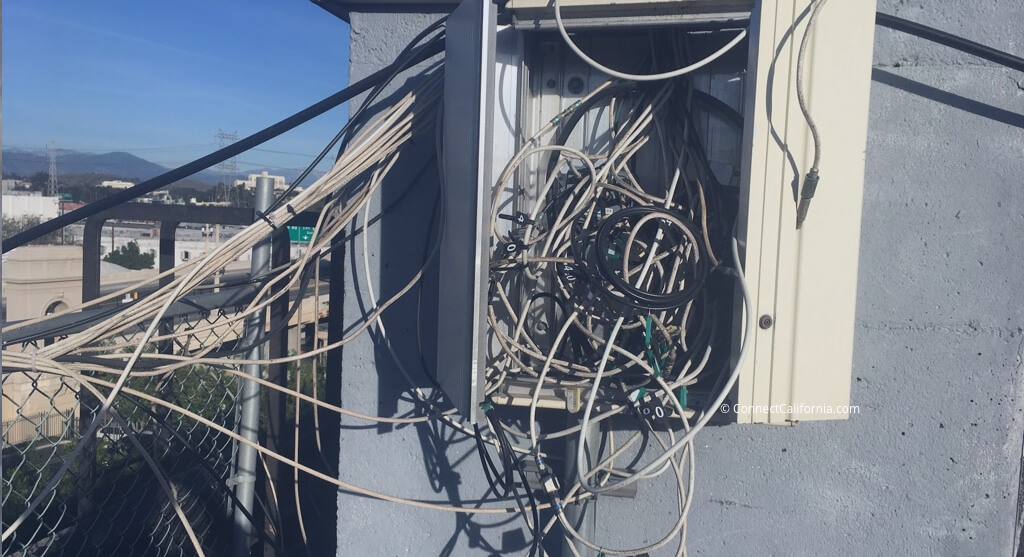
In addition, Section 789.3c of the Code describes the legal penalties for a landlord who tries to evict a tenant by disconnecting utility service to their rental unit.
In California, a landlord found in violation of the law is subject to pay $100 per day of violation, with a minimum of $250.
A judgment can include additional payments to the tenant for damages and legal fees or other incidents of constructive eviction.
When a Landlord Can Shut Off Utility Service (Temporarily)
A landlord can temporarily shut off the utility service to a rental unit, or building, in case of an emergency or scheduled repair.
While California code is not completely clear on notice requirements, avoiding legal conflict with tenants is well worth the trouble of making a few phone calls or posting a notice.
1. Landlords can shut off utilities during emergencies and for safety purposes
While the definition of emergency varies, the service interruption should address an urgent need for repair or other work.
An emergency utility shutoff can prevent significant safety risks to residents of the property and repair staff, or substantial property damage to tenants or landlords.
One example is shutting off gas service to a rental building to investigate and repair a reported gas leak.
In another example, water service is turned off to prevent a broken water pipe from flooding a rental unit.
While both situations can (and do) happen, they are rare and actual emergencies.
Consider that someone living in a single-family home would experience the same utility service outage for a similar emergency.
The temporary interruption of utility service to a rental property due to an emergency should be very infrequent to avoid issues with tenants involving housing authorities.
2. Landlords can shut off utilities for scheduled repairs
Maintenance or repair issues that are not emergencies, but require a temporary utility interruption, should be scheduled with proper notice to tenants.
Electrical or plumbing work often requires a service outage to perform the job safely and effectively.
For example, consider these common unit repairs:
| Repair Type | Likelihood of utility shutoff | Reason for utility shutoff |
|---|---|---|
| Plumbing | Very Likely | Pipe glue must be dry to cure |
| Electrical | Very Likely | Safety risk for Electrician |
| Gas | Very Likely | Safety risk for Technician |
| Internet | Somewhat Likely | Frequent disconnections during repair process |
Landlords should notify tenants of a temporary utility service interruption for repairs at least 24 hours before the shutoff.
Notification should (at least) include the scheduled time of service interruption, a brief explanation, and an estimated service restoration time.
Suppose a rental property’s water service needed to be turned off for a minor leak repair. Notice to the tenant could look like this:
“Attention Tenant: water service will be turned off at about 1 PM tomorrow for a pipe repair outside the building. The water outage should last about one hour.”
Whenever possible, landlords should communicate utility service issues and outages to tenants. Emails and texts are efficient methods, serving as time-stamped documentation of notice.
Rental Property Internet Service Shutoffs
Internet service is an essential part of modern residential life. Tenants may select a rental property based on internet service availability alone.
California Civil Code 789.3 does not include internet service as a listed utility but does not exclude it either. As such, addressing a tenant’s internet service interruption falls to the rental agreement.
Internet listed in a rental agreement as a provided service, whether paid directly by the tenant or included in rent and paid by the landlord, becomes a condition of the agreement.
If internet service is not part of the written and signed rental agreement, a tenant will have more difficulty arguing that interrupted service violates utility shutoff rules.
Avoid oral agreements between a tenant and landlord or informal internet access, such as a landlord sharing a Wi-Fi password with a tenant.
A written rental agreement including details about provided services is the best practice for both tenant and landlord.
Resources for Tenants and Landlords Handling Utility Shutoffs
California offers a variety of support resources for tenants and landlords:
1. California Tenant Guide
The California Department of Real Estate created a publication titled California Tenants: A Guide to Residential Tenants’ and Landlords’ Rights and Responsibilities.
This document provides clear information answering many questions related to rental agreements between tenants and landlords, including utility service questions.
2. Local Housing Authority
California’s local housing authorities are great resources for tenants and landlords alike. A list of all CA housing authorities can be found here.
Reader Questions & Expert Answers
The questions below were submitted by readers. Names have been anonymized. Answers are for informational purposes only and do not constitute legal advice.
Six months without water is extreme. This isn’t a gray area - intentionally shutting off water to push a tenant out is textbook “constructive eviction” and it’s illegal under California Civil Code 789.3.
The law is actually pretty specific about damages here: the landlord owes $100 for every day the water was off, with a minimum of $250. Six months of that adds up to potentially $18,000 or more - before you even count what you’ve spent on bottled water, temporary housing, or anything else.
I hear you that the water commissioner complaints aren’t moving fast. A few other doors to try: your local housing authority (different from the water commissioner) can issue habitability violations. Tenant rights organizations sometimes take on extreme cases like this for free. And honestly, cases this bad occasionally get traction when local news picks them up.
Since you’re already in court, make sure whoever is handling your case is citing the specific daily penalties under 789.3. You’ve been living without water for half a year. The damages should reflect that.
Yes, the fair housing specialist gave you good information. You’re right to be frustrated - “emergency repairs” twice a week for an extended period isn’t really emergency repairs. It’s either a building with serious neglected maintenance, or something else is going on.
California Civil Code 1941.1 requires landlords to keep plumbing in working order. If it needs constant emergency repairs, that’s actually evidence the landlord isn’t maintaining the property properly. And under 1942.4, they can’t collect full rent when you’re missing essential services like water.
Here’s what I’d do: start keeping a log. Every time the water goes off, write down the date, time, how long it lasted, and whether you got any notice beforehand. Then send your landlord a written request asking for rent credit for the days without water, plus a clear plan to fix whatever’s causing all these “emergencies.”
If they refuse or blow you off, you’ve got options - housing authority complaint, small claims court for the prorated rent, or the “repair and deduct” remedy (though check with legal aid before trying that one).
Wait - a pipe repair for a laundry room that’s been broken since 2017 is going to take your water away for five straight days? That doesn’t add up.
If the laundry room has been shut off for six years and everyone’s been doing laundry elsewhere, this isn’t an emergency. And five full days to fix a pipe is a long time. Proper notice should also tell you when the water goes off and when it comes back on - not just “Monday through Friday.”
You shouldn’t have to go without water for five consecutive days for something that could have been fixed years ago and doesn’t even benefit your unit. If they’re going to do this, the landlord should at least be providing some kind of accommodation - portable toilets, water deliveries, something.
I’d respond in writing right away asking why this will take five full days, what accommodations they’ll provide, and whether they can do the work in phases so water gets restored each evening. Keep a copy of everything. If they don’t respond reasonably, your local housing authority is the next call.
No, they can’t charge full rent when you didn’t have hot water or a stove for two weeks. Under California law (Civil Code 1941.1 and 1942.4), hot water is considered essential - a unit without it isn’t fully habitable.
The tricky part is figuring out exactly how much of a reduction is fair. There’s no official formula. But two weeks without cooking or hot water? A lot of people would argue that’s worth 30-50% off for those days - roughly half a month’s discount at minimum.
Since they already promised you a credit, put it in writing. Send something like: “Following up on the rent credit discussed for the 14 days without gas service - I’m expecting $X applied to my next rent payment.” Give them a deadline. Keep a copy.
If they don’t follow through on what they promised, you can deduct it yourself from next month’s rent (just make sure you’ve documented everything in writing first), or take it to small claims court. But hopefully a clear written request will get them to do what they already said they’d do.
Having to leave your home with your kids just to access water - while paying a monthly water fee - is not okay. Multiple shutoffs per week, up to 8 hours at a time, with notice that sometimes comes after the water’s already off? That’s a pattern, not a series of one-off problems.
Here’s what I’d do: start keeping a log. Every shutoff - date, time it went off, time it came back, whether you got notice and when. Screenshot any texts or emails, especially the ones that arrived after the water was already out. Keep your water bills showing what you’re being charged.
Then write to management asking for prorated water charges. You’re paying for service you’re not receiving. Put it in writing and keep a copy.
If they ignore you or push back, you’ve got a paper trail now. Your local housing authority handles habitability complaints - frequent utility interruptions count. Tenant rights organizations can tell you whether this pattern supports a rent reduction claim. And if nothing else works, small claims court is there to recover what you’ve paid for water you couldn’t use.
You shouldn’t have to leave your house to find water for your family. That’s basic.
Frequently Asked Questions
Can a landlord turn off water or power without notice in California?
A landlord cannot turn off utility services like water or power to a rental unit unless there is an emergency or scheduled repair. Turning off utility services with the purpose of forcing a tenant to move out is considered an a 'constructive eviction,' and is prohibited by California Civil Code 789.3a.
How long can a landlord turn off utility service for repairs?
A landlord is subject to daily legal penalties for a rental unit without utility service per California Civil Code 789.3. Repairs normally are completed within hours. A tenant should generally contact their local housing authority or seek legal protection if utility service to their rental unit is off for more than a day with no explanation or timeline provided for repair.
Tiffanie Hawley has worked in the water treatment industry for nearly 20 years as a treatment plant operator, laboratory technician, regulatory consultant, and plant manager. She aims to educate readers about the scientific and human contributions that are part of producing and protecting drinking water.